A2 Ghee vs. A1 Ghee: What’s Better for Your Health?
Discover the truth between A2 Ghee vs. A1 Ghee: What’s Better for Your Health? Learn the critical protein differences that separate traditional, native cow ghee from commercial dairy options, and how making the switch can completely eliminate post-meal dairy bloat.
A2 Ghee vs. A1 Ghee: What’s Better for Your Health? Ghee has rightfully earned its status as a premier healthy fat in modern nutrition. However, as you browse the market, you will notice a major distinction on the labels: A2 Ghee vs A1 Ghee. Many people assume that all clarified butter acts the same way inside the body, but the reality is that their molecular profiles are entirely different. The difference isn't just a marketing trend—it comes down to the genetic makeup of the cows yielding the milk. Let’s look at the scientific and metabolic differences between A2 and A1 ghee so you can choose the absolute best option for your family's long-term health.
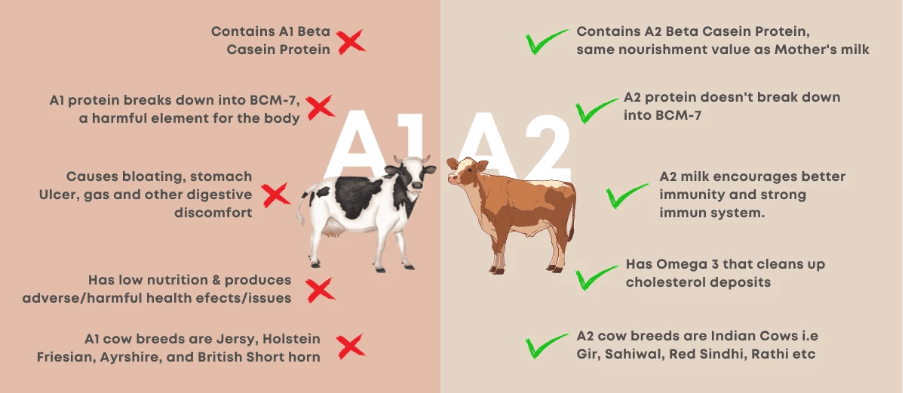
1. The Core Difference: The Beta-Casein Prote in The primary variance between these two types of ghee starts at the genetic baseline of the dairy cattle. The A2 Structure: Authentic A2 ghee comes from native, purebred humped cows (such as the Gir, Sahiwal, or Red Sindhi). The milk from these indigenous breeds contains only the A2 beta-casein protein chain. When your body digests this specific structure, it breaks down cleanly into harmless amino acids that your digestive tract recognizes instantly. The A1 Structure: Modern commercial A1 ghee is sourced from crossbred, industrialized Western cows (like Holstein-Friesian or Jersey). Due to an ancient genetic mutation, these cows produce A1 beta-casein. During digestion, this protein breaks apart to release a tricky peptide called Beta-casomorphin-7 (BCM-7).
2. Eliminating the Dairy Bloat and Gut Discomfort A significant percentage of people who believe they are lactose intolerant can actually consume pure A2 ghee with zero issues. Why? Because their discomfort isn't caused by milk sugar (lactose), but rather by the inflammatory actions of the A1 protein's BCM-7 peptide.BCM-7 binds aggressively to the opioid receptors in your gastrointestinal tract. This interaction slows down your digestive transit time, disrupts normal bowel movements, and causes food to ferment uncomfortably in the gut, leading to painful gas and immediate post-meal bloating. A2 Ghee contains absolutely zero A1 proteins, allowing your stomach to process the healthy fats smoothly without any inflammatory friction.
3. Protecting Your System from Leaky Gut Syndrome Because A1 ghee releases BCM-7 inside your lower digestive tract, it can cause the delicate mucosal lining of your intestines to swell over time. This continuous, low-grade irritation gradually weakens the tight junctions of your gut wall, contributing to a condition known as "leaky gut."